
- Cleaning Hog Hair Paint Brushes
- Pig Hair Brush
- Hog Hair Artist Paint Brushes
- Hog Hair Paint Brushes
- Pig Hair Paint Brush
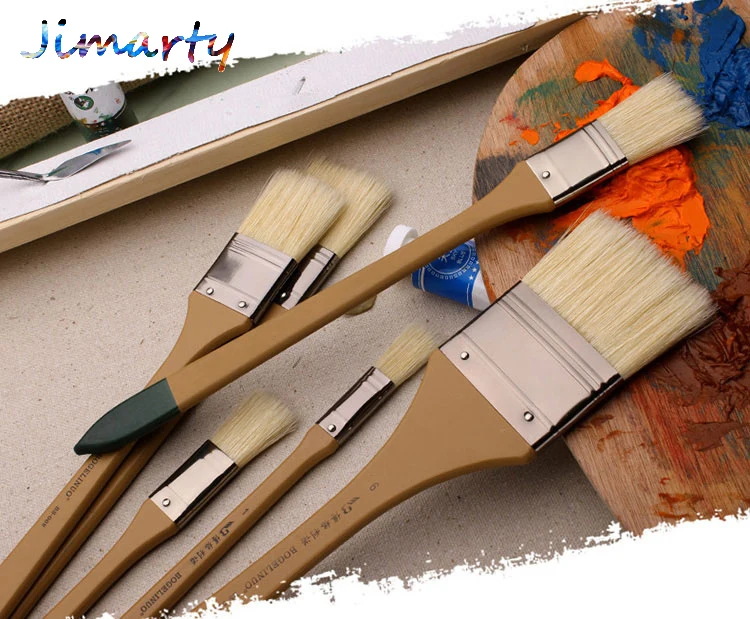
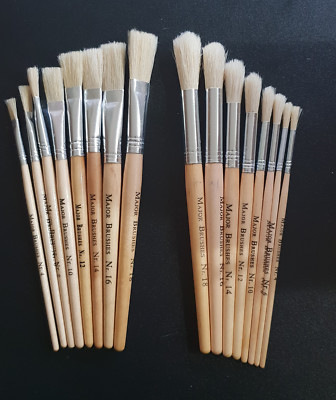
Hog bristles, for example, have long been used for paintbrushes and art brushes because such animal fibres are flexible and resilient and display an excellent capacity for holding paint. Then, what hair is used in paint brushes? Natural bristles are made from some sort of animal hair, such as hog or badger. Synthetic bristles are often made from nylon, polyester, or a combination of both. Amazon.com: Painting Brush Set Graffiti DIY Color Art Painting Round& Flat head Brush Pig Hair Plastic Watercolor Paint Brush for Kids Toddlers 4PCS (18.8cm, B): Beauty. Did you scroll all this way to get facts about pig brush? Well you're in luck, because here they come. There are 253 pig brush for sale on Etsy, and they cost $32.20 on average. The most common pig brush material is ceramic. The most popular color? You guessed it: white.
In February 2017, Selangor office of the Domestic Trade, Co-operatives and Consumerism Ministry seized paint brushes of various types that were believed to be made from pig bristles from three hardware stores in Shah Alam. This issue became viral and sparked concern especially among Muslim consumer1.
The lab tests have been proven significant in verification of the hair origin as some of the brushes had been tested made from pig bristles and not correctly coded or did not bear the origins mark; i.e the A913 and A680 codes (pork bristle code)1.
Halvec Laboratories is an ISO1725 accredited laboratory which offers reliable and accurate Halal testing service to detect pork contamination via DNA Analysis. The testing covers verified DNA extraction procedure, screening of the extracted DNA and sequence-specific detection through real-time PCR. The COA obtained from lab tests shall be used as supporting document to assure Halal integrity of the product/sample tested.
For more information about our service and request for quotation, please contact our team via email to info@halvec.com.
References:
- Enforcement Officers Seize Pig Bristle Paint Brushes. The Star Online. Accessed
- In: Uncategorized
Cleaning Hog Hair Paint Brushes
Hot golden buns and other pastry delicacies are great appetizers for most of us. But there is a hard fact we have to face – there are great chances that our loaves, pastry products, barbecues and so on have been stroked by PIG HAIR!! And the walls of our houses too!
Not only do we Muslims have to mind what we eat, but also what has been used to make them. Brushes (pinceau in French) are present in nearly all kitchens and every place where commercial food is prepared. They have many uses and are so practical: they are used to spread milk and syrup on loaves, buns and other pastry cakes to make the finish shiny and brown once out of the oven. They are also used to grease oven plates. We also use brushes to top our BBQ with seasoning and honey. And who doesn’t use them to paint the walls of houses? We have so far failed to realize that most of these brushes are made of PIG HAIR…
Yes, It’s Really Pig Hair!
A brother once went to a huge paint-brush manufacturer and inquired about the origin of the brushes’ bristles. The director stated that it is pure pig hair imported from China. When asked about the possibility of using synthetic (nylon) bristles instead, the director said that the pig hair from China costs less and is more convenient both in manufacturing and use.
I took up the discussion with some colleagues and some disagreed, saying pigs don’t normally have that much hair, and that while boars (wild pigs) do have a lot, it is extremely expensive to obtain their hair on commercial scale. They concluded that the common brushes we have can’t be of pig origin, or else they would be very expensive. I made a search for pig hair suppliers in China on the Internet and I contacted them, inquiring about the price. I was astounded by the ease at which pig hair could be procured and by the price. I was offered pig hair, treated and ready to manufacture brushes, for as low as 5 dollars per kilo! And mind you, one kilo of very light pig hair is a whole lot. They exist in different lengths (some are as long as 14 cm) and different colours, and can be supplied at thousands of kilos per month. Google-up some ‘hairy pig’ images and you’ll see how hairy and furry pigs can be; you can even mistake some for sheep.
Pig Hair Brush
What are the Brushes For?
Most brushes made of pig hair are destined for painting houses and buildings, and they are available everywhere for very cheap at hardware shops. However, these brushes are used for a thousand and one other things, including DIY works and those in the kitchen. Most of our pastries and bread makers use these very paint brushes to grease the oven plates, to brown loaves and cakes, and to top BBQs, etc. There are also some high-quality pastry brushes especially made of pig hair.
Art brushes too are made of pig bristle, especially if they come from China and are intended to be used by children at school.
What Do We Do Then?
Here is what we can, or rather should, do.
The Alternatives. There are alternatives to pig hair. There are brushes made of synthetic fibres. Ask for these. True they are not as much easily available as those made of pig hair, but if we keep asking for them, they will become common. Demand-supply rule. The synthetic brushes do very well in pastry and painting. They are slightly more expensive, but it is worth the change.
Hog Hair Artist Paint Brushes
Hog Hair Paint Brushes
Spraying. Another interesting alternative for browning and spread syrup, milk and seasoning on food items is spraying, which is very cheap and convenient. Plastic sprayers are available everywhere, especially in supermarkets. Gardeners use them for fertilizers. Just fill the syrup, milk or seasoning in and press. On the long run, it is way cheaper than using brushes as it does not require frequent renewing and there is little or no wastage of the liquid.
Create Awareness and Change Habits. Spread the news and make people aware of this. If some public pressure can be applied on local bread makers and pastries and why not the authorities, things can change. Import habits will change. First, go to Muslim professionals who are using pig hair brushes and talk them into changing. It costs nothing. It is most probable that they had been using those by ignorance. They will thank you. Many non-Muslims too will be disgusted with what they will learn and will change.

Ask Before Buying. In case you aren’t sure about the brush used somewhere, inquire and make your point clear. This will give you peace of mind, create awareness and help make some change.
Art Brushes. Paint brushes for art are delicate and are therefore made from different animals’ fur, but also from very refined synthetic bristles. Try some squirrel brushes, for example, if you want high quality. For another instance, once I came across a brush made of goat hair, originating from a Muslim country.
House-Painting. Good synthetic brushes are available for that, where rollers cannot be used. Else there are paint rollers of different sizes.
Isn’t Pig Hair Permitted?
Pig Hair Paint Brush
Pig in itself is haraam (forbidden) for both consumption and practical use. The same applies for its derivatives. There are some animals whose flesh is haraam for consumption, but whose skin and fur, after having been processed (tanned) and turned into leather, is allowed for use. But for pig, it is different. Every part of a pig is prohibited, including the fur, and even after processing. On the other side, it is true that if our loaf is brushed with pig hair, we are not consuming the hair, but only the loaf. This makes some differences in opinion among jurists. But isn’t the difference to be entertained only for those who are at ease with the idea of pig hair fluffing their food, while there exist synthetic brushes for that?